Overview
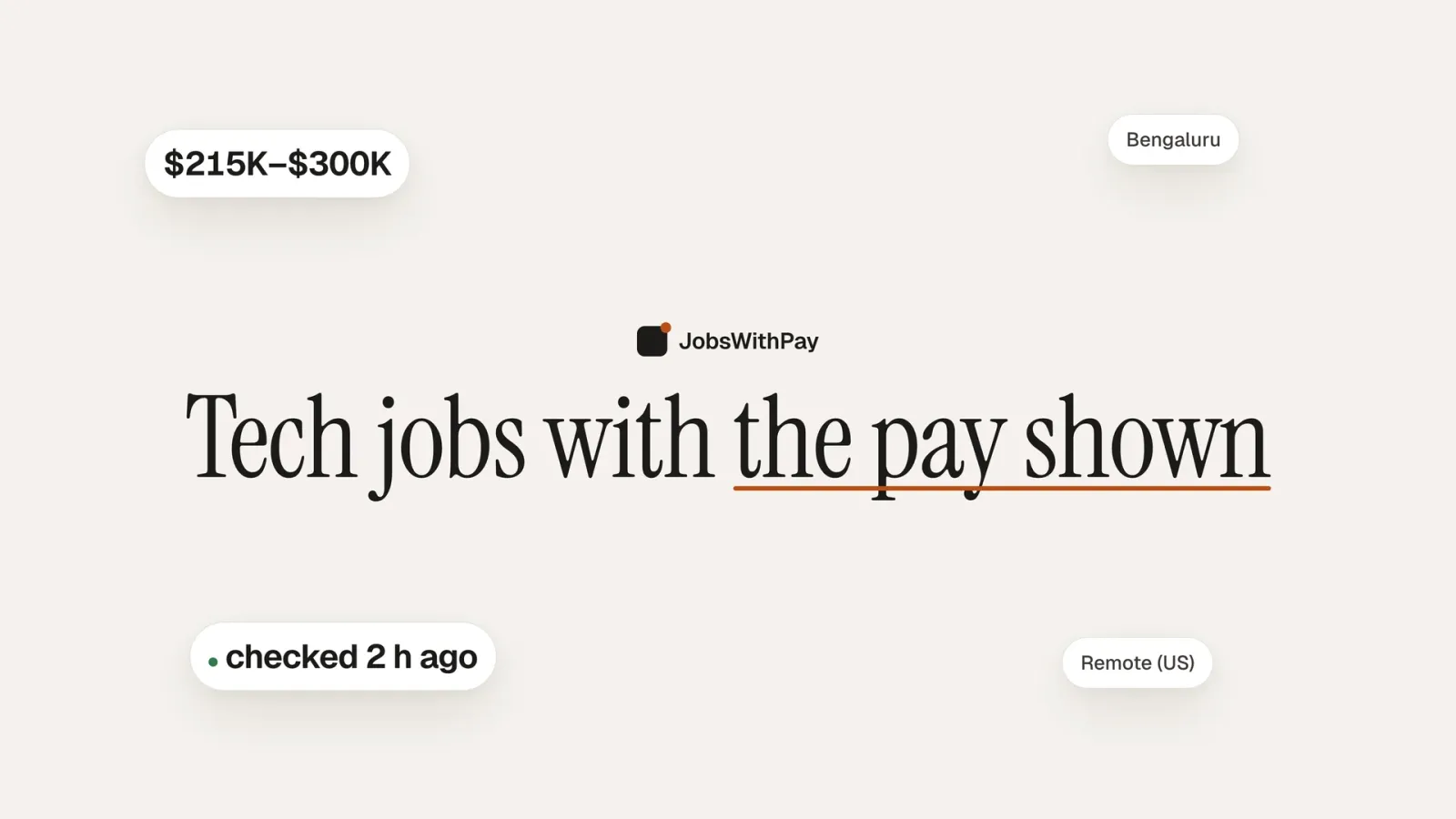
JobsWithPay is a tech job board that puts the salary on the listing. Rather than scraping aggregators, it reads openings directly from company career pages and from boards hosted on Greenhouse, Ashby, Lever and Workday, then shows the base pay range the employer actually posted. The index currently holds about 93,089 open roles from 7,793 companies, and roughly 47,723 of those state a number.
Key Features
Posted pay, never estimated. Every listing carries the base pay range exactly as the company wrote it. When an employer stays quiet on compensation, the job reads "Pay not posted" instead of a guess.
Daily re-checks. Each role is read again from the company board every day, and a job that disappears at two checks in sequence gets pulled. The site reports that 93 percent of open jobs were verified in the previous 24 hours.
Pay explorer. Choose a job type (software, ML and AI, data science, product, design) plus a place (Bay Area, New York, remote in the US) and the chart ranks companies by median posted base pay. Netflix leads Bay Area software at $388K to $558K across 23 jobs, with Anthropic and OpenAI close behind.
Ask AI search. A plain-language box takes queries like "remote senior ML jobs that pay $200K or more" or "data engineer jobs in Bengaluru that use Spark" and matches them against the index, next to quick filters for remote, posted pay, entry level and jobs added today.
Portfolio pages with proof. A résumé becomes a public page where each skill is marked proven, stated or without proof, backed by merged pull requests, papers or published packages. A recruiter can compare that page against a specific role in one click.
Broad source coverage. Listings come from Greenhouse (36,187 roles), Ashby (21,875), company careers sites (10,685), Lever (9,507) and Workday (6,146), plus Y Combinator and Hacker News hiring threads. An 18-search test put JobsWithPay at 44.3 percent of results showing pay against LinkedIn's 18.7 percent, with no agency reposts or duplicates.
Use Cases
An experienced ML engineer weighing two offers wants the number before spending an evening on applications, and the pay explorer answers whether a company's median band clears their floor. A new graduate working through entry-level filters leans on the daily re-checks so they aren't applying to roles that quietly closed. Hiring teams get the other side: a portfolio page that shows evidence instead of a list of claims.
The value proposition is simple. The pay sits on the page, sourced from the employer and refreshed every day.